What to check and change
- Find where the unhappy trip starts. Use the city Satisfaction rating and visible passenger feedback to pick one stop and direction. The announced sad-smiley feedback can point to long waits. Write down the service and destination you are investigating rather than changing every city line.
- Observe several departures. Check whether waiting passengers get aboard, whether vehicles depart full, and whether arrivals are irregular. Treat repeated full departures as a capacity clue; a long empty gap is a different problem. Do not infer a universal frequency target from another save.
- Follow the complete journey. Include transfers and the final stop, not just the fastest leg. If the vehicle is delayed on a road, use the junction checklist; if the wrong stop sequence adds a detour, review the line.
- Change the observed bottleneck. For crowded departures, test additional suitable capacity on that service. For a slow trip, investigate its routing before buying speed. Use the purchase comparison to consider comfort alongside speed. These are editorial experiments, not guaranteed rating formulas.
- Repeat the same observation. Keep the stop, direction and observation period comparable. Watch whether boarding and the complete trip improve, then check Satisfaction again. A city-wide rating can lag behind a single improved departure or still reflect other poor lines.
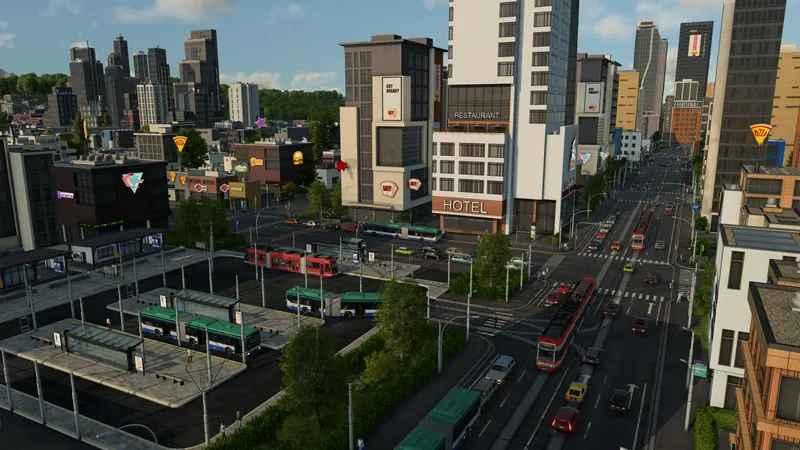
Official pre-release footage. Older plans may change; the written answer states what is established and what still needs a build check.
How to tell it worked
Passengers on the tested service board with less repeated waiting or complete their trip more efficiently, and the relevant Satisfaction feedback improves over a comparable observation period. Record the result before applying the same change elsewhere.
If you are still stuck
- Vehicles still depart full: Recheck whether the extra capacity actually reaches the crowded stop and direction. More vehicles on a different service do not address this queue.
- The wait improved but the rating did not: Follow onward transfers and other unhappy stops. Review comfort and total travel time; Satisfaction is not a measurement of one bus departure.
- Population remains flat: Switch to the city-growth diagnosis. Other ratings and completed passenger/cargo deliveries remain separate constraints.