What to check and change
- Pick one queue and its destination. Follow a vehicle approaching the bottleneck and identify the movement it needs: straight ahead, turn or merge. Note whether it is stopped at the junction or waiting behind congestion further along. This avoids rebuilding the wrong intersection.
- Trace the physical connection. Inspect the approach and exit the vehicle needs. A visually adjacent road or extra lane is not proof that the movement is connected. After recent construction, inspect the resulting route rather than assuming the previous path survived.
- Review the junction lane tool. Inspect permitted merges and turns for that movement. The announced tool can restrict or block road-vehicle paths. Before changing it, account for bus, tram and delivery services that also use the junction. Do not remove a required turn just to shorten a queue elsewhere.
- Review traffic-light phases. The announced junction controls allow phase changes. Compare which movements wait and which are being served, then make one targeted adjustment. Exact timings and an ideal universal phase plan are unverified; the correct experiment depends on the actual traffic.
- Observe traffic after the adjustment. Watch the same approach and its downstream exit over several cycles. Keep a change only if vehicles clear the movement without creating a worse queue or breaking public transport. If demand overwhelms a usable road, consider service or corridor changes rather than repeatedly retiming one light.
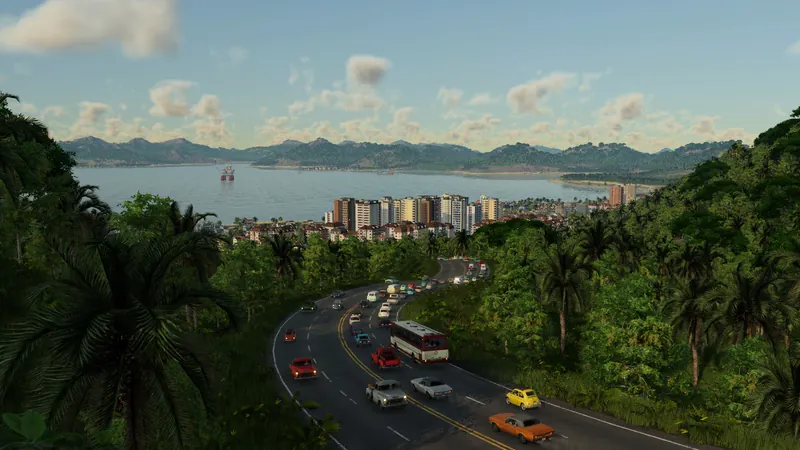
Official pre-release footage. Older plans may change; the written answer states what is established and what still needs a build check.
How to tell it worked
Vehicles using the intended movement cross the junction and reach the connected road, the same queue clears more reliably, and passenger/freight services still follow their stops. A green light alone is not proof that the downstream road is usable.
If you are still stuck
- The queue starts beyond the junction: Inspect the next bottleneck. Faster release from this light can simply move the queue to an occupied downstream segment.
- A line no longer reaches its stop: Recheck turns, lane connections and the service stop sequence before adding more vehicles.
- Traffic improves but city growth does not: Use the city ratings checklist; traffic is one rating among several.